Belong · Contribute · Thrive
Creating spaces where neurodivergent people can belong, contribute, and thrive.
The Neuroinclusion Project is a programme of research and resources, co-produced with neurodivergent researchers, students, and community members.
What we do
We advance inclusion for neurodivergent people through research, collaboration, and community expertise, across three areas.

Education
Supporting neuroinclusion in learning environments, from primary classrooms to postgraduate research training.
Research
Transforming research practices by centring neurodivergent expertise and participatory, co-produced approaches.

Society
Challenging stigma and fostering belonging to create more inclusive communities, workplaces, and public life.
What does it mean to be neurodivergent?
Neurodivergent is a social identity term that describes people whose brains and, therefore, ways of experiencing the world, differ from what society defines as ‘typical’. Neurodivergent is not a medical diagnosis, though people who identify as neurodivergent may have diagnoses of conditions such as autism, ADHD, intellectual disability, or dyslexia.
Neurodivergence also encompasses mental health conditions, like anxiety and depression; acquired conditions such as brain injury and PTSD; and neurological conditions more commonly thought about in terms of physical symptoms or motor control, like epilepsy, Parkinson’s disease, and multiple sclerosis.
If your experience of the world is different to the norm because of how your brain works, you may identify as neurodivergent.
Resources

Available now
Journal articles
Peer-reviewed research on autistic and neurodivergent students’ experiences of university.

Available now
Infographics
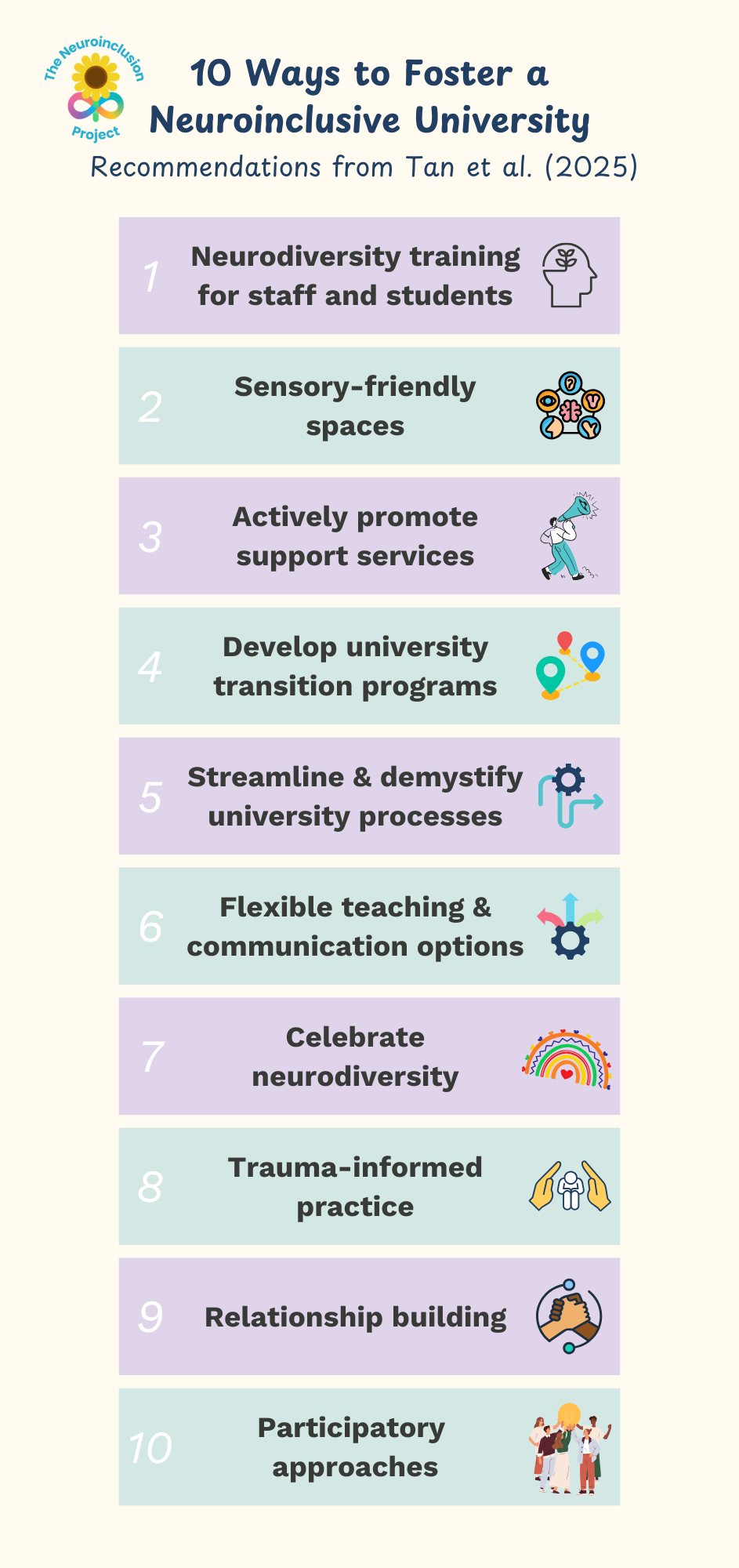
One-page summaries of our findings, including what autistic students say universities can do better.

Coming soon
Self-paced modules
Introduction to Neurodiversity, and Sensory Processing.
Subscribe
Get an email when we publish new research and resources.