
Guidelines, infographics, interactive tools and recorded talks from The Neuroinclusion Project, with self-paced modules and documentaries on the way.
Looking for our journal articles? They are listed by theme on Our Research.
Guidelines
Education
2026 · Australian Council of Graduate Research
Good practice guidelines for inclusive supervision of neurodivergent HDR candidates
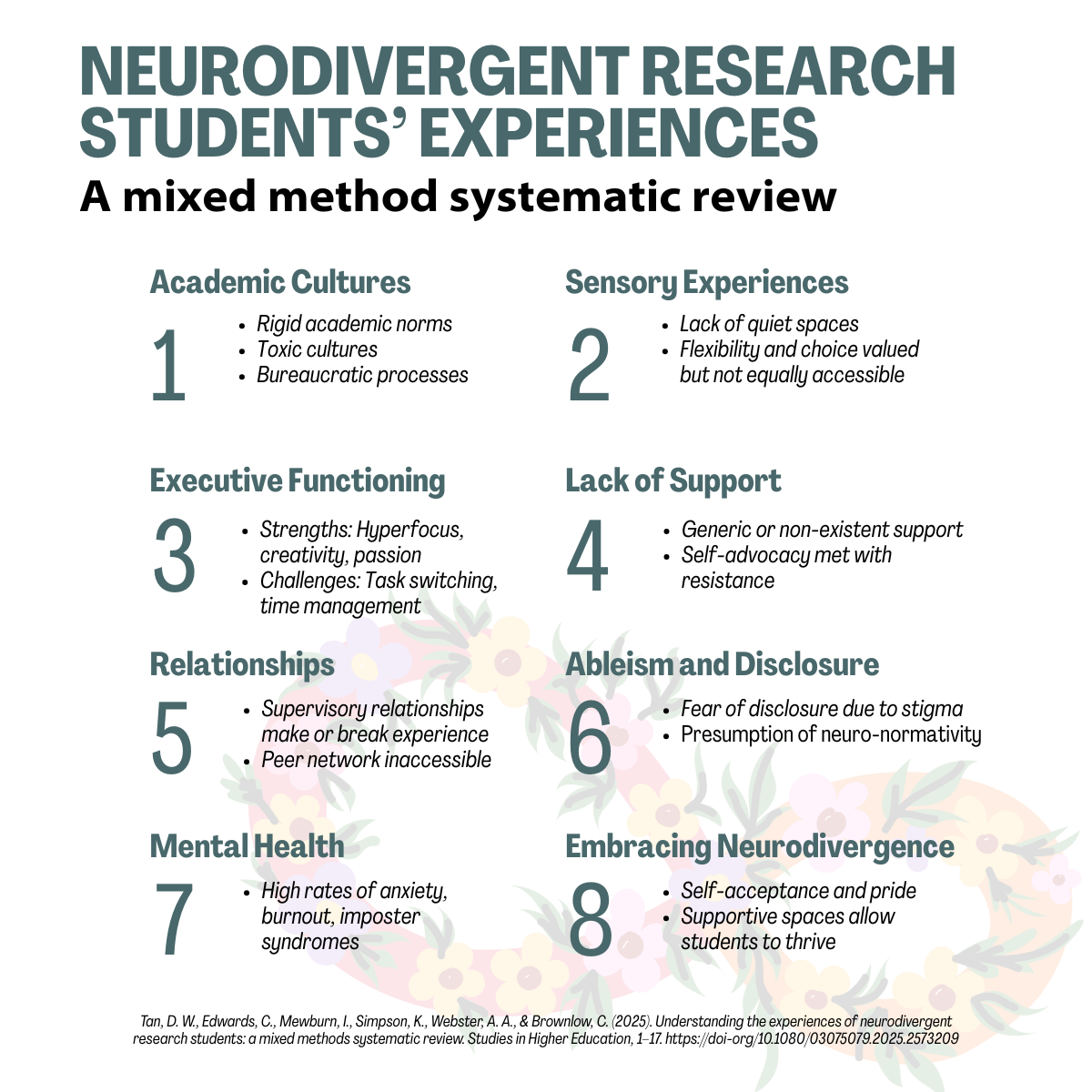
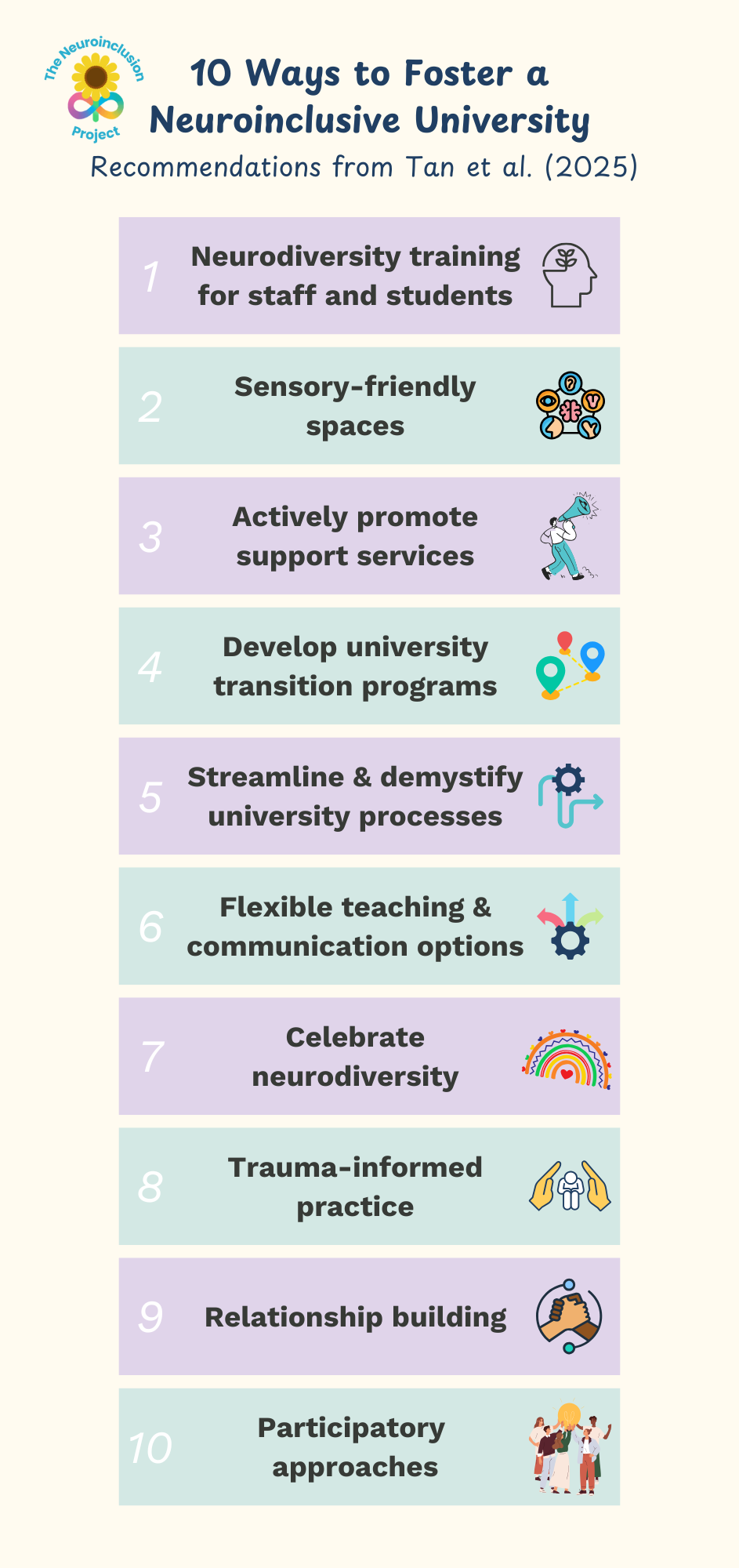
Recommendations for universities and supervisors on supporting neurodivergent Higher Degree by Research (HDR) candidates. The guidelines draw on our systematic review of neurodivergent research students’ experiences and on consultation with supervisors and neurodivergent candidates.

Infographics
One-page summaries of our findings. Select an infographic to view it full size.
Interactive tools
Research Practice
Interactive dashboard · 382 articles, 2001–2023
Participatory autism research: An exploratory dashboard
Explore the 382 participatory autism studies included in our mapping review of research published from 2001 to 2023.

Videos
Education
April 2024 · ADCET webinar
Autistic students’ experiences of university in Australia
Dr Diana Tan and Marion Rabuka share findings from interviews with 21 autistic people about discrimination they faced at university, and how universities can better support autistic students.
Coming soon

Self-paced modules
Free self-paced online modules: Introduction to Neurodiversity, and Sensory Processing.
Documentaries
Short documentaries in which neurodivergent people talk about their own experiences.

